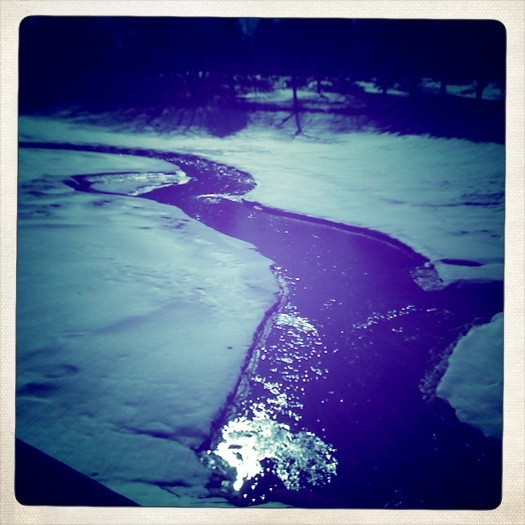
Thinking of noise pollution and whispers and Whiskerz.
I am working on a new website that seems to be taking longer than one of my projects...
Recently, I finished reworking a few of the alphabet pieces that are now on view at the Hosmer gallery.
Reproductions are also on sale at the etsy store. I've been impressed with results of the reproductions, something I didn't feel completely at ease with initially but have been really pleasantly surprised at the response and interest.
Looking forward to seeing Stan Sherer's show at Historic Northampton. I dig the local lore.
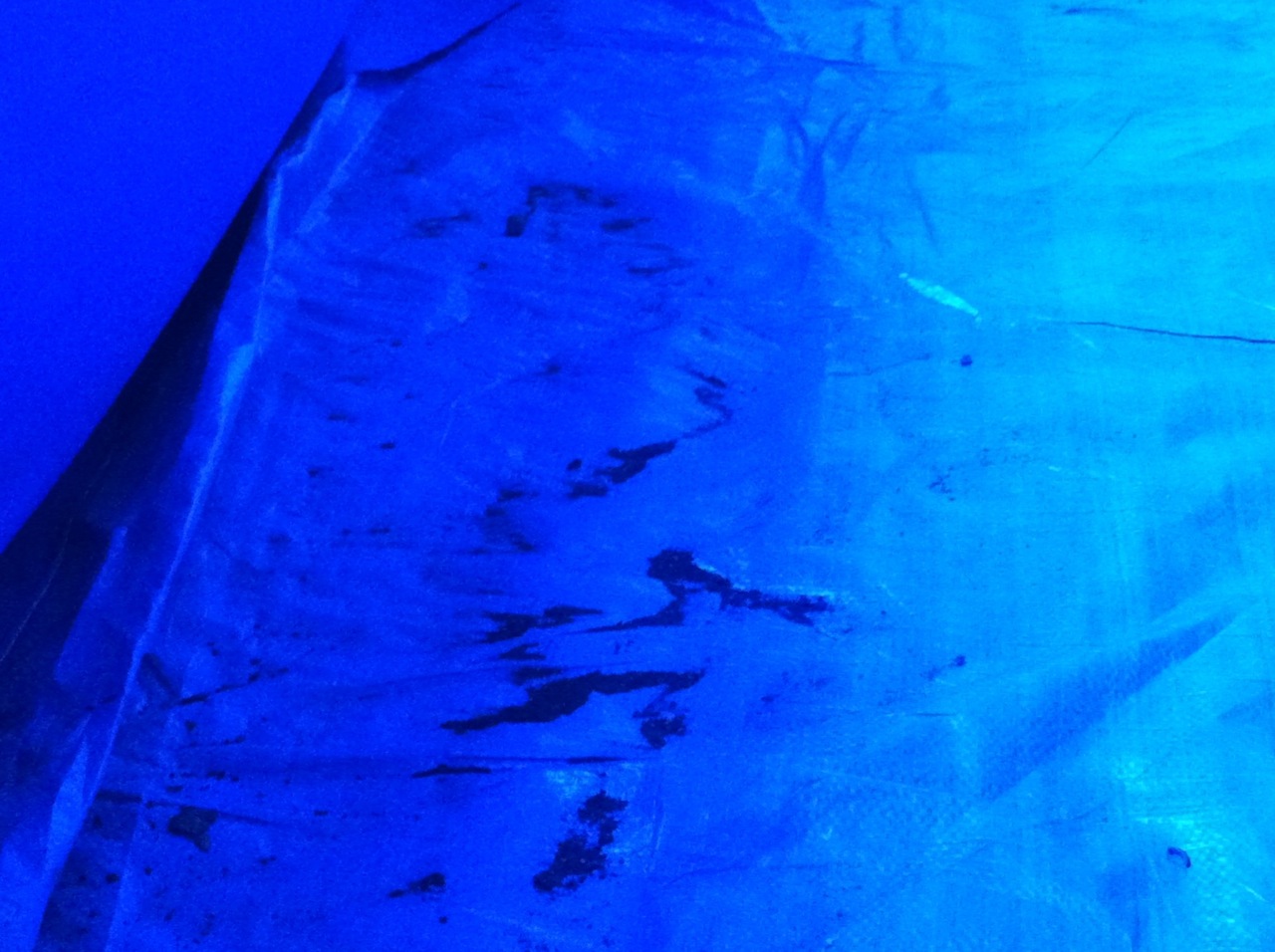
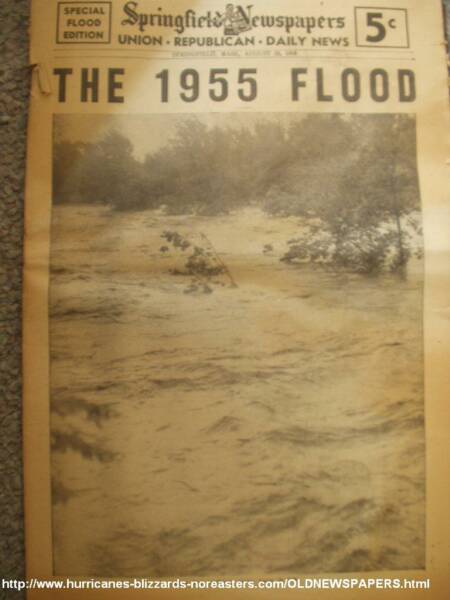
I walked a box of fallen residue from the bricks in the building where my studio stands. The water damage created from the flood of 1955 breaks down the bricks' surface and now it crumbles almost up to two bricks worth a week. As I walked, I thought about where the water of that flood stood and how far up Union Street the moat of water must have come. It's hard to imagine water when it is not there reflecting, especially in massive amounts displaced from a nearby pond. These remains are bright orange. When I sit in my studio I can hear the dust fall in the corners that are now covered with blue. The orange looks magnificent upon its complimentary color (not the best documentation above). I simply sweep it up and walk the remnants to the Old Town Hall then place it in a box on view. When scraping the dust into the small hole, it feels very much like I am working with cremated remains. The flood of that year was a travesty throughout New England. It left a big hole in the 1 Cottage Street building. If you look closely you can see where it was rebuilt. The new brick looks stable and less worn.
I like to think way back before Easthampton had two ponds- when the Nashawannuck was just a meadow, or was it woods? Then there were no factories. The landscape must have been immensely different before Williston opened up the gates of Broad Brook. I look and try to locate the remnants of the damage--peering for cracks and stains.I also look to see what is not there- the water creeping up the building.
A couple of years ago when I began working on the earth project I entered Cartledge's on Union Street. It is a card shop full of knickknacks, office supplies, and other such things circa 1985 (if not earlier). The store is run by Nancy and it has been in her family since she was a kid. She took over proprietorship when her father passed away. Now she creates the best-ever window installations that include wacky pencil sharpeners, faded postcards, and not-so-subtle reminders about upcoming holidays.
On my second visit, I was introduced to the late Albert Kiesling aka "Dutchie." Nancy's husband is the nephew of Kiesling who was a quirky painter, snow sculptor (I'm talking giant historical heads, horses, and party goers made of snow that filled his front yard.), actor, papiermaché sculptor, yodeler, and float maker who lived in Easthampton until about 1968. He was the king of kitsch in Easthampton or as his nephew calls him, "Easthampton's Most Famous Artist" and "expert mixologist." Kiesling took on a substantial project of recording the city's buildings, many disappearing from the changing landscape of the 50s and 60s, via painting. Reproductions of these paintings have been an excellent resource to my work often showing vantage points that were not captured in photographs. As soon as I bought my first book on Kiesling(I am the proud owner of the black and white and color versions and don't forget the tote bag too!) I knew he had a place in my thoughts. I still peruse the now worn pages of the books for his paintings, pictures of his dinner (largest baked potato ever), and even his death certificate (in both versions). The books are almost as much of a source of fascination as the man himself.
So if you are in the area of Cartledges, grab a book on Kiesling and read up, because the larger than life character plays a role in the water piece.
PROJECT ELEMENTS EASTHAMPTON: WATER OPENS July 10-August 10, 2010
EASTHAMPTON, MA— An opening reception for Burns Maxey’s multimedia show Project Elements Easthampton: Water will take place on July 10, 2010 from 5 - 8 pm. The opening begins the second installment of Project Elements Easthampton—a four-part multimedia work about Easthampton and its relationship to the elements: earth, water, air, and fire. The opening and show will take place at two locations. The video and sculptural installation will be shown at 1 Cottage Street Rm 1-06, and additional visual work will be on display at the Easthampton City Arts gallery.
Maxey’s installation at 1 Cottage Street Room 1-06 explores dreams, history, and the waterways of Easthampton in a surreal setting of audio, video, and sculpture. In one room, rich shades of blue create an immersive aquatic environment containing life-size blue beds that have bulbous mattresses evocative a pregnancy or obesity.Robin’s egg blue headphones are distributed throughout the installation for listeners to hear audio recordings telling the dreams of three Easthampton women. These dreams were collected by Maxey and then recited by Easthampton waterways to capture field recordings that immerse the listener simultaneously in the dreams and the streams, millponds, and rivers of the city. Other headphones contain the musical score for a richly ethereal video that guides the viewer through a series of dream sequences that reference historical figures of Easthampton, waterways, and surreal narratives. The lush instrumental score was created in collaboration with Timecard, an experimental pop band based in Amherst.
The second more intimate room has a video and audio installation that’s focal point are audio clips from Patty Gambarini’s documentary, Reflections of the Lower Mill Pond. The audio recounts one couple’s story of their relationship with the Lower Mill pond during the height of Easthampton’s mill era.
In conjunction with the Cottage Street installation, the Easthampton City Arts gallery will feature video stills, objects, sculptures, and collages that relate to water and the installation. Included in this exhibition will be a horned head, the three books of dreams, and collages about the flood of 1955.
All exhibits are free and open to the public and take place in 1 Cottage Street room 1-06 and the Easthampton City Arts gallery, 43 Main St. Easthampton, MA. More information can be found at www.projectelementseasthampton.com.
This program is supported in part by a grant from the Easthampton Cultural Council, a local agency which is supported by the Massachusetts Cultural Council, a state agency
The fluidity of water seems to leaking into this project. I am not exactly sure where it is going to turn next. I have some bursting blue beds in my studio. I also have some tasty footage for the water video, not to mention dreams, historical stories about the waterways of Easthampton and others that delve into the real and unreal. As of now, the work is saturated and rich both conceptually and visually but its transformations seem so quick like running water that I can't quite hold onto. It's almost as if the end result is unraveling surreptitiously on its own. It's coming soon. Until then, Check out 6.7.8 at Mobius on May 14. It's sure to please.
By the way, belated thanks Preview MA mag and Laura Holland for the fab spread in the April issue.It's always informative to read someone else's words about your work.
These last few water induced days have led me outdoors. With optimum timing for field recordings of water--drains, waterfalls, and raindrops. I have been returning the dreams given to me to the waterways of Easthampton. Walking down the street reading someone else's dreams has a ceremonial feel about it. I think I may be creating water dreamscapes in this land-filled reality.
The band Timecard released its album Vacation in January. It is a concept album with songs ranging from a rocking tune about diner encounters to a crooning lullaby about the last day away from it all. Its collection of songs and instrumentals capture a quirky sensibility with a diverse sound. Many of the songs have an ambiguous relationship to the theme, vacation. We certainly aren’t listening to stories about euro trash gallivanting through Germany or thrill seekers traversing in a jungle in Belize. There is no doubt that this vacation is located on the Americana highway with a twist of current electro indie sound with pop and rock influences.
I worked with Timecard on my last Project 01027 so I knew a bit about the Vacation album as it was being created. A few things that caught my attention (other than songs that mention soymilk and lactose intolerance) was the interest in creating an album that works as a whole piece with each song flowing and working off of one another. By doing this, Timecard creates a eclectic journey with a theme song included.
I asked Timecard a few questions about the album and what this project is all about.
How did the concept "Vacation" come about as an album? Why a concept album? The practical purpose of a concept album is to help me write lyrics. At one time I wrote very serious personal sorts of lyrics, and I wanted to try something more fun and a little less introspective.
I don’t remember a decision to do vacation songs. I think it evolved naturally during a time period when I didn’t do very much music because I was in school. I was only doing music during breaks, so I ended up writing abstractly about fun things I was experiencing during those time periods.
I do remember that at some point I organized ideas of what I wanted to write about. There were a lot of things I didn’t end up using for the album too, including a song about bowling, one about swimming, and another about motels. A lot of that was left off to get a nice flow to the music. I also had quite a few additional instrumentals, which I ended up using instead for the Project Elements walking tour.
The sounds of the Vacation album have a disparate quality to them. Some it is very catchy, almost pop, while in a singular song the sound can shift to a contrasting DIY feel, then some audio is really rocking then changes to electronic beats. How did this sound evolve? I think it’s because I like a lot of different music, and the albums that have really stuck with me are those that are diverse.The other reason is that I had a diverse crew of collaborators. There are more electronic things that I did with San Francisco musician Zip, and more rocking things I did in a more live band setting with some friends from my former life in a small southern town.
Why did you start incorporating video into your music making? It’s to make the album more interactive. I wanted to explore ways to entice listeners to take in this set of songs as a whole piece, and also to work with the idea of stimulating multiple senses. My thinking is that creating some images makes for a really variable and enticing way to experience the album.
At the same time, I’m interested in the idea that one can combine random sensory experiences, and our brains will tend to sync it. So one can watch the images as traditional music videos, or take the images and put the songs on shuffle on a computer or MP3 player for a dreamier experience of nonsensical imagery.
It’s been done many times in music before. But I was most inspired by the album Zaireeka by The Flaming Lips. The album is 4 cds that have to be played simultaneously on 4 music players. The idea is that since the cds will never sync the same, each listening experience is unique. And having to get 4 music players in one place makes the album an event that requires an audience typically. In a similar sense, I want the Vacation album to be an event one experiences.
You mentioned on your website your views on humor in music and how musicians are expected to be serious. Was this specific to a certain genre of music? I see humor in pop, old country, folk, and hip-hop. Why do you think it’s the norm that humor is not considered a valid tone within music? It’s true that different genres view humor as more or less valid. For example, hip-hop is at one end with a long history of funny things like skits, while rock tends to take itself more seriously.I’m not sure why humor isn’t more prevalent. It is a really inspiring feeling to laugh. Just as powerful as love or anything else people sing about.
Where do you see yourself and this project (Vacation) going in the future? What other concepts do you have lurking? This project has had such a long gestation that I want to really explore ways to let people know about this music and the band. The most immediate next thing will be releasing a version of the videos to the public. I also want to do more performances and collaborate more, and possibly something that would involve guest performances from some of the collaborators on the album like Zip and the Virginia crew of Joe Wingenbach and Jeremy Plaugher.After that I’ll be really excited to write and record more music. I’ve already started demo-ing around a new concept involving the love song, and am so excited about the possibilities of new music.
It is difficult to isolate the specific essence that makes up Angela Zammarelli’s work, but when you see it, you might guess that she is inviting you to play. Much of her art is an accumulation of performance, soft sculpture, collage, bookmaking, installation, and video (often put together in one piece) that incorporates a fantastical world of structures and characters that seemingly act as protection to the artist. It’s unclear if the protection is guarding from something in reality or something lurking in her dreamlike universe.Regardless it is reminiscent of the surreal fort-making world of childhood filled with outrageous plot lines and codes and signs only to be deciphered with contact and time. There are references to domesticity, DIY, architecture, and childhood wrapped up in the humor of Guy Ben-Ner and the feel of Annette Messager.
In Making New Friends in Old Places (2009), Zammarelli walked the streets of Northampton, MA, wearing a portable doll fort, made up of countless handmade dolls. The mound of dolls appears in various places on the street handing out books to surprised and curious passer-bys. The book reads, “Look for me. I may be by the shrubs or a parking meter,” and has colorful drawing and cloth on its pages.Suddenly, the sturdy and playfully arranged hill bolts up and Zammarelli’s legs take the fort on the run to its next location. At one point in the video documentation a viewer exclaims, “Oh god this is cute!”
Zammarelli also performed this piece at the Art Shanty (coolest idea for an exhibition ever!) Projects in Minnesota. On her blog she writes, “Something I have been noticing when performing in public is that people want to take your picture. This is fine maybe even great, but sometimes I worry that they just take your picture but really don't think about what is happening in the performance and why you might be doing it. I wonder if it gets thrown up to being wacky and that's about it?”
It’s really difficult to judge what viewers think, but as whole when one presents publicly the artist relinquishes that control as they open the work to other’s eyes and minds. Yet although the initial reaction might be “ that’s cute,” that first response is an important entry into the continual deliberation by the viewer.Work that is invested in humor, has the capability then to proceed forward in any direction following the first laugh.
Her video performance Kitchen Transgressions is not to be missed as she wears a brillo dress and cleans broken dishes on the floor. And her more recent I Want Want Want You is a return of the fort with dreamy earnestness that is embedded in the blurry world seen in a video inside the fort.
Currently Zammarelli is spending a few months in residency at the Bemis Center for Contemporary Arts where she is working on an installation and video. Hopefully when she returns to her studio in Easthampton, we will get a chance to check out the new work. In the meantime follow her developments on her blog here.
It's almost time for the selected women of Easthampton to return their recorded dreams to me to start working with on the water project (February 1st!). I am excited what their results may bring.
Insofar all have admitted hesitancy in sharing dreams once they started putting pen to paper. It's amazing what our heads can conjure up from piecing together our daily activities and fleeting thoughts in the most mismatched ways. Luckily I am not a strong believer in Freud's thoughts on relationships with dreams and our subconscious & unconscious (a theory he even later debunked).
I was reading an article in the New Yorker about nightmares that spoke of the universal transformations in dreams due to social changes. Such as when TV was black and white, more dreamed without color. Now dreams are becoming even more disjointed due to influences by YouTube and the Internet.
I can't help but to fascinated with the random narrative our brains create.
I was a latecomer in the the life of Flywheel's first venue on Holyoke Street in Easthampton. I had heard of Flywheel but never had a chance to check it out until 2006 when I moved to town and saw there was a film screening happening. I went to the event with low expectations because the building's facade looked pretty run down and because I had heard that Flywheel was primarily a punk rock venue-- although I am a fan of loud music and noise, that conjured up assumptions of what I thought the space would be.
I ended up being absolutely blown away.
It was a screening of Who is Bozo Texino, a black and white film of the hobo train journey and a legend train tagger. After the screening, there was a low key talk and Q&A by the filmmaker Bill Daniel. It was fantastic and so unexpected. And it only cost $5 to get see it.
I believe that the opening of Flywheel in the Old Town Hall will generate needed foot traffic on Main Street. Easthampton has seen tremendous revitalization and arts flurry in the past year with thanks to the ECA and artists just coming out of the watusi in this funky little city. Last Thursday evening, I had to search for parking on Main Street to attend the ECA art party. How exciting!
Let's keep the momentum going in Easthampton.
Memberships have many incentives and make great gifts.
Or give $10 for the "$10 from 200 people" campaign
If you haven't seen the space in the past month, you must check it out. It will amaze you and entice your imagination to infinite possibilities for Easthampton! You can sneak a peek at the Flea Market happening Sunday, December 13, 2009 from 10 to 3. Flywheel is almost there!
An Interview with Maggie Nowinski photos by John Polak
A fantastic facet of Project Elements Easthampton: Earth was that I had the great fortune of meeting some extraordinary artists that I had no idea were creating in my neighborhood. There is undoubtedly a strong contingency of innovative artists who are working in Easthampton, if not in the surrounding Pioneer Valley. They get a little lost in the mazes of the mills and the hills but they are here, working. When I met artist Maggie Nowinski a year or so ago she told me as I was leaving her studio that she was pleased to think of me working hard in my studio just across the pond as she worked in hers. I think that sentiment rings throughout these studios that we toil in.
Nowinski has been toiling away indeed. After completing Project Intersect, a three-part collaborative video project, projected onto Easthampton buildings, she has added plastic to her list of mediums. After piecing together thousands of empty water bottles then exploring the ubiquitous plastic bottle through video, drawing, and performance, she is due for an exhibition at the Hampden Gallery at UMass, Amherst on January 21 – February 23, 2010.
I had a chance to talk to her before her show and get an inside glance at her process and thoughts.
Your upcoming show at Hampden Gallery is called Swallowed-suggesting both the consumption of liquid and the consumption of unnecessary goods. Tell me more about that title.
Swallowed has a lot of connotations. The first, you mention, consumption of liquid and next the consumption of the commodity object/concept, which of course bottled water so blatantly signifies. The process of swallowing bottled water is extremely problematic and loaded – and it was something I thought about a lot when I drank bottled water. So many practices involve voluntary and involuntary swallowing of ideals, mythologies, and violence – it is something that we can’t avoid if we are to participate in this world. I think of the word swallow as interchangeable with consumption, absorption and integration. I often experience small inner battles. It’s like I gulp my emotional response to something concerning the war or a natural disaster, and then I’ll turn around and see some information about drinking bottled water for health and purity and I’ll reach for it – or I’ll sneak a peek at a tabloid magazine or admire the airbrushed skin of some actress on Vanity Fair that is impossible to obtain – infuriating – swallow.
We consume and absorb our identities through visual experiences and language and bottled water seems to be an extension of this. We even consume notions of recycling to relieve our guilt about consumption – another problematic concept. It sounds like a real downer, and I guess it is, but there is something sensual about this project that has kept it beautiful to me. (There is also the connotation of swallowing ejaculate, which seems not completely irrelevant, but certainly not central).
What is your relationship to the plastic water bottle?
I used to drink bottled water and I would experience anxiety around buying it. It has always seemed so obviously wrong, the notion of bottled water – in a way that seems almost redundant to even talk about – I don’t know how often I’ve heard someone say, “what will they bottle next, air?”
But at the same time I have always loved to drink water – I love the somatic experience of hydration. Believing that it was healthy to drink water, I would purchase this object that seemed so inherently wrong and I’d feel both that I was swallowing all of the bullshit that brought the water to me, and at the same time felt I was committing a healthy act. I sometimes wonder if the whole hydration thing is part myth. Anyway – it was a charged relationship. I also started to become visually aware in a kind of neurotic way, whenever I saw bottle water – which happens all the time. I’d be in a room and I’d be distracted, peripherally by the plastic bottles – so in order to resolve this I started to photograph bottled water with my phone. I feel like I’m photographing them in their natural environments. Evidence. I did finally buy a reusable water bottle.
How have you created this piece? Is the process an important part of this work?
The process has become integral to the significance of the work for a few reasons. I collect bottles in different ways. I dig through recyclable and other trash in public places (behind fitness centers, at the dump, on the street, etc.) and people see me doing this – mostly they don’t say anything on the street, but at the dump I get questions, which is interesting. I found that having someone documenting this process collecting bottles makes for a more interested public – like when you filmed me collecting a that outdoor concert this past summer.
Some people are on the lookout for bottles, or consume bottled water and save the bottles for me. I try to encourage everyone to stop using bottled water, obviously – it can be problematic to have people think, “I’ll just give this to Maggie for her project” before they reach for a Smartwater.
This is the most public and participatory project I’ve made. The bottle collecting can be a collaborative effort as is the creation of the strands. I’ve had work parties where I give simple instructions on how to string the bottles (technical and formal/aesthetic) – and I’ve had help with thousands of bottles this way. It’s really been an interesting way to connect with people and to make my studio practice less solitary.
One other thing about the process that I have found significant, is that I’ve created a bit of a monster – not only because multiple bottle strands have a tentacle look to them, but also because I am constantly tripping over the tentacles and having to drag them around. They are a pain to deal with – a kind of burden both in physical presence, but also in their creation – it is the most repetitive activity I’ve ever engaged in my studio. This burden is a kind of microcosmic reflection of the burden that bottled water is to our world environmentally, economically, and socially.
The drawings, videos, photographs, and sculptures have the connected underlying theme of the ubiquitous water bottle. How do you see the media representations differing from each other? How do they interact?
That is a good question – I’m trying to work out what notions are repeated in different mediums, and what ideas are teasing out a unique moment in the larger project. Some of the videos, I call short performances. In them I am interacting with the strands of bottles –trying to organize them, manipulating them into different shapes, getting tangled, dragging them, etcetera. I am trying to access the many levels of my anxiety around bottled water and by extension my own participation in the world. In one I am mimicking digestion, in another I am trying to maneuver my body through the mess, in another I am building a waterfall with strands backwards so there is a sort of graceful, snake charmer like control I have. I suppose I’m looking at how my body makes sense and maneuvers the bottles, and by extension, society.
The drawings are a playful reaction to one of the videos and to the shadows cast on the studio walls from hanging strands. I’m trying to expand upon the idea of digestion and the internal in these, but also make them seem a bit like swollen intestines meet parasitic worms. I like the directness of charcoal here. These are a bit more playful and removed from the performances.
The photographs of the bottles in their natural environment are a way to address my anxiety about the ubiquitous presence of them in our visual milieu.
I also have some stop motion videos that are intended to be humorous. In one, two water bottles, of the big and little Poland Spring variety escape from my bag and make their way down a dirt path to a stream where they empty their contents and float away. I am directly addressing the paradox of natural and unnatural – kind of like when I project running water onto the plastic bottle waterfall sculpture. Maybe there is some redundancy here.
I hope you don’t mind me saying but this work definitely has an OCD quality to it. I suppose all repetitious art does to some extent. It’s odd though because when you see the thousands of bottles together, there is a formal quality to the work. Was this a random formalist accident or did you envision that occurring?
First and foremost, I want to see what things will look like. The visual and visceral qualities of the sculpture are what I’m most motivated by. I want to see it. I also was interested in seeing the pattern the labels would make, and how the light would play with the strands. They are quite beautiful, I think, and I’m attracted to that. Formal qualities are definitely an important incentive always.
It is sort of interesting that this kind of OCD aspect is a way to engage in a process that is immediate at a time in my life when I am working a lot and my studio time is precious – building these strands gives me immediate access to an aspect of this project without having many consecutive hours at a time. Plus it has been a way for me to sort of exorcize and iterate my anxieties. It’s strange because it feels proactive in a kind of activist sense, too, but it isn’t.
How do you know when a bottle piece is complete and how many bottles does it take?
I am looking for a visual grace, power and density. How many depends on the site. At UMASS’s Hampden gallery I think between 10,000 -12,000.
Do you consider yourself an environmental artist?
Nope, but I like a lot of work that had been characterized as environmental art and I think this work fits into that category.
Art with refuse and even particularly water bottles seems prevalent today. You were recently in a show in Philadelphia that had varying responses to the ecological, economic and societal problems surrounding water, some others using plastic water bottles. What do you think about this phenomenon?
I think the issue of water is so outrageous that it has entered the visual and conceptual language of a lot of artists work. Maybe it has to do with a blatant instance of injustice. All of the issues surrounding water – access to clean water – are so intertwined with capitalism and corruption (a recurring theme we have become somewhat numb to over the years – what else is new?), which is in such a stark contrast to the simplicity of the element of water. Water corruption is just so impure it became impossible for me not to make some work about it. Personally, it has been an experience for my ego to deal with being “one of the artists working with plastic water bottles” – but it feels kind of good to be part of this larger dialogue.
Is it plastic forever? What’s next in your bottle or outside of it?
NO! I want to recycle the plastic bottles and move on after a few months. I’ll be installing a version of Swallowed in Boston in 2010 at the shipyard as part of an international exhibition through HarborArts Boston. I always have many ideas in the working, but I’m looking forward to being able to explore some different ideas in my studio and seeing what develops.
So it seems like Paul Auster is getting much attention for his new book hence the many interviews and bios that I keep running across. How did I miss out about him and SiriHustvedt? I feel as though I have been fooled and denied years of tawdry images inside the writers' lives. Think: the author's tabloid. It could be big.
On another note...Project Elements Easthampton: Earth is now complete and I feel satisfied and exhilarated in moving forward with the water piece. Dreams. Blue. Liquid.
There will be some updates and info throughout the process, so check it out if you get a chance.
Thanks to everyone for making Earth a superb show. You are dy-nO-might!
Maintaining 15 grass chairs is a time-consuming process. I get up every morning before my job. Water, the chairs, clean the space and cleanse and rinse the sprouting seeds. At dusk I do the same. Previously, I have had exhibits that utilized all sorts of media. The show is hung.There is an opening. I take down the work. The creation process has already occurred and I am somewhat engaged with the work while the actual show is happening. With this installation, I have been absolutely involved throughout the show. I watch it change daily.
I am still too far in the middle of creating this Project Elements Easthampton: Earth piece to assess it fully. But I do know that I am prolonging the act of creating as long as I possibly can and that's where I always clamor to be.
Today, I found mushrooms growing on a grass chair. A happy accident.
It's all about the location right? Hopefully not always.
So this Project Elements Installation is located in 1 Cottage Street. But this place is like a maze.
How to see the grass chairs live and in person: 1. Go to the BACK of 1 Cottage Street 2. Park 3. Go to Loading Dock B, in alcove behind the white garage 4. Go to Room 106
NEW HOURS The Old Town Hall is usually open 9:30-5:30 p.m. Tuesday - Saturday October 19- November 29 from Tuesday and Thursdays 5:00-7:00 p.m. and Saturdays 1:00-4:00 p.m.
All times subject to change. Feel free to contact projectelementseasthampton@gmail.com to arrange a visit or check project01027 on twitter for updates. Take the audio tour anytime!
This project actually didn't begin with with the study of Easthampton history. Initially I had little hopes and dreams of becoming an amateur historian of weird stories about this small city.
At the end of February, a couple of years ago, I had an overwhelming urge to capture Easthampton houses that I saw on night walks. I was drawn to the saturated and cinematic light of the night sky juxtaposed with the quirky architecturally styled houses that grace these streets. There is an exorbitant amount of vinyl siding and faux stone in these parts. But I find that there lies a beauty in their oddness. I feel similarly about East German buildings or say the color scheme of the 1950s & 1970s. A push/pull reaction is initiated, like you don't really want to look, but you can't help it.
So think of this. February in New England. Extended film exposures, sometimes up to 30 minutes long. This is where this project began.
Over the series of two years I photographed numerous houses throughout Easthampton. 18 or so will be part of an Installation at 1 Cottage St. Rm 1-06 opening October 10, Easthampton, MA
I was talking to a native Easthamptonite about project01027 and she kept asking me why am I doing this project. I am not native to this town, far from it. But when I moved to Easthampton I found that it was a community with many hidden surprises whether it be its natural beauty that sometimes seems hidden among the vinyl siding yard-less houses or it's immense quirky community that resides here.
This coincided with an artistic change in my work that was moving towards stepping beyond the typical norms of conceptual and community art and making work that was both conceptually interesting to me and to my community about my community, and in turn art or whatever tool I was using. Suddenly I have very few rules in my work. I use any or every medium. I do what works then. This particular project (there will be three more)is certainly odd since it has taken a historical bent.It might be connected to the obsession with local food, culture, and politics that seems to be pervasive in this country with our CSAs and buy local stickers. Am I a localrist: an artist who focuses on local culture? So, I made that up. But aren't we creating new words everyday?
So Why am I doing this project? 1.Because I adore Easthampton 2. I believe that artist's work is a reflection of their community and influences the community, and I thought perhaps it's about time to make my work represent that 3. It fascinates me and hasn't stopped yet.
And so many more reasons but I'll save those for late.
October 10-November 29 Old Town Hall, 1 Cottage St, Rm 1-06, All over Easthampton MA that's all you you really need to know, but if you have an attention span, please read on...
EARTH CITYWIDE SHOW OPENS!
EASTHAMPTON, MA—Project Elements Easthampton: Earth is a multimedia project by artist Burns Maxey, that will be shown in three parts throughout the city of Easthampton including the Old Town Hall, 1 Cottage Street in room 1-06, and a cell phone walking tour. The shows will open on October 10 and close on November 29, 2009. There will be an opening reception on October 10 from 5:00 to 8:00 p.m.
After two years, Burns Maxey is presenting the first installment of Project Elements Easthampton that focuses on the element Earth. The three-part multimedia exhibition is an ambitious project that incorporates installation, audio, photography, illustration, and historical study all about the city of Easthampton and its relationship to the element earth.
In the Old Town Hall at 43 Main Street, the hall gallery will show 26 illustrations of found historical stories that are “The Easthampton Alphabet.” Each story corresponds to a letter of the alphabet with an illustration of the story above it. The paintings and collages vary stylistically and the stories range from quirky to poignant.
“I searched for stories beginning in the late 19th century through the 1950s, sifting through microfilm day-by-day, hoping to find stories about the everyday people of Easthampton that affected me,” says Maxey. “It was an arduous process but every time I found a forgotten tale, it was as if I unveiled some hidden piece of Easthampton.”
The second portion of the project is a self-guided audio tour of historical stories. These stories are not typically known history, but more unusual accounts about unknown characters and occurrences of Easthampton. One story is about the fellow George Searle, who attempted to saw his house in half and move it in the middle of the night. This happened where the current day Manhan Café exists at 72 Union Street. Listeners can grab a map, walk to the destination, and call a provided number found on the map. There will be thirty total stories, and listeners can select each one by pressing the number of the story pertaining to locations throughout Easthampton’s town center. Listeners can also download a podcast of the audio tour in iTunes by searching for “Project Elements Easthampton. The tour online and podcast in iTunes will be released on October 1st.
The third exhibition is a multimedia installation located at 1 Cottage Street Room 1-06. The installation will consist of audio sculptures whose elements encompass chairs covered in grass, telephones playing audio stories gathered from Easthamptonites, and night photographs depicting Easthampton homes. The installation will be changing dynamically during the exhibition. Visitors will be able to leave their own stories that may be included in the sculptures as part of the installation. Artist Burns Maxey will also seed new chairs during the first few weeks of the exhibition. As part of a representation of the transformative quality of nature and recognition of growth and disintegration, the grass will be growing and seeded throughout the exhibition. By the completion of the show, the chairs will have lived their life cycle and the grass will decay naturally.
Project Elements Easthampton is the brainchild of Burns Maxey who is a multi-media artist based in Easthampton, MA. She is a graduate of the Rhode Island School of Design and has exhibited in San Francisco, Washington DC, New York City, and throughout the New England area. Maxey is continuously interested in finding ways to combine new technologies, art, and innovative exhibition spaces outside of the gallery confines. She recently performed and created visual pieces for a collaborative experimental show at Mobius in Boston with Butoh dancer Ellen Godena and her sidekick, the twitchie robot.
Music by Timecard, an Amherst based band, is also featured on the audio tour. Individual instrumentals may be downloaded for free at projectelementseasthampton.com on October 1st.
All exhibits are free and open to the public and take place in the Old Town Hall and 1 Cottage Street room 1-06. For those without a cell phone or mp3 player, there will be a few mp3 players to check out at the Cottage Street exhibition. More information and additional materials can be found and downloaded at www.projectelementseasthampton.com soon.
About two weeks later than expected I have settled on a space for the Installation that will now be will shown at 1 Cottage Street Room 106. This is an installation of grass covered chairs with night photography and city folk's stories fed through rotary telephones. I beginning to refer to as my Our Town Goes Chia installation. That will be shown in conjunction with the Easthampton Alphabet Illustrations at the Old Town Hall at 43 Main Street in Easthampton and an audio cell tour of weird but true unknown Easthampton stories. Pick up your maps at the Old Town Hall or the 1 Cottage Street installation.
The grass growing will be quite the experience as I am planning to grow 18 chairs altogether throughout the course of a month. Actually this entire project coming to fruition is an incredible experience since it has been a two year undertaking. The excitement I feel is overwhelming.
For a couple of years now I have been sifting through microfilm day by day. It take me about two hours to go through two months. I am currently in the year of 1950 and have delved into the digital archive of 1986 to 2009. I am working fast to gather all that I can before the final presentation of the audio stories and illustrations. I hate the thought of missing out on an historical story. But it is inevitable. For instance just last night I found a story in the 1990s that discussed an article in 1918 that I had missed through my readings ages ago. It was about 200 female West Boylston mill workers who became extremely aggressive toward the police and innocent bystanders during a strike. They sought decent working conditions.
One article reads: "The women employed the same weapons as this morning, throwing ammonia, rotten eggs, mustard, ginger, red pepper etc. at the police especially. An innocent bystander, Ned Alvord, was attacked a choked by a woman who was only persuaded to loosen her grip on his throat by a club in the hands of an officer."- July 17, 1918. Rather meaty stuff to miss out on, don't you think?
In all of this time much consideration and thought has gone into how I select stories of importance. Some are mundane while others horrific and many more are hilarious mishaps. This selection process feels instinctual-- I recognize a story I want to use right when I read it. And this makes me wonder about my role in this work. I am in a limbo stage as neither(or both)artist and/or historian. In a way I relate to the idea of the trickster as one who stirs things up--as I think most artists are. Although our approach is (or can be) genuine we disturb the norm and what is considered truth. I have always related to the idea of the artist being a jester of some sort and now reading the hardly new Trickster Makes this World by Lewis Hyde (1998) allows my thoughts to linger in that idea.
I am choosing historical stories that are not (yet) remembered in our books of history of our founders and developers. They are like artifacts I am bringing to the surface. I enjoy this subtle disruption in certainty.
Has anyone noticed that this town is full of tricksters? Easthampton seems to thrive on it.

 Thinking of noise pollution and whispers and Whiskerz.



.jpg)